
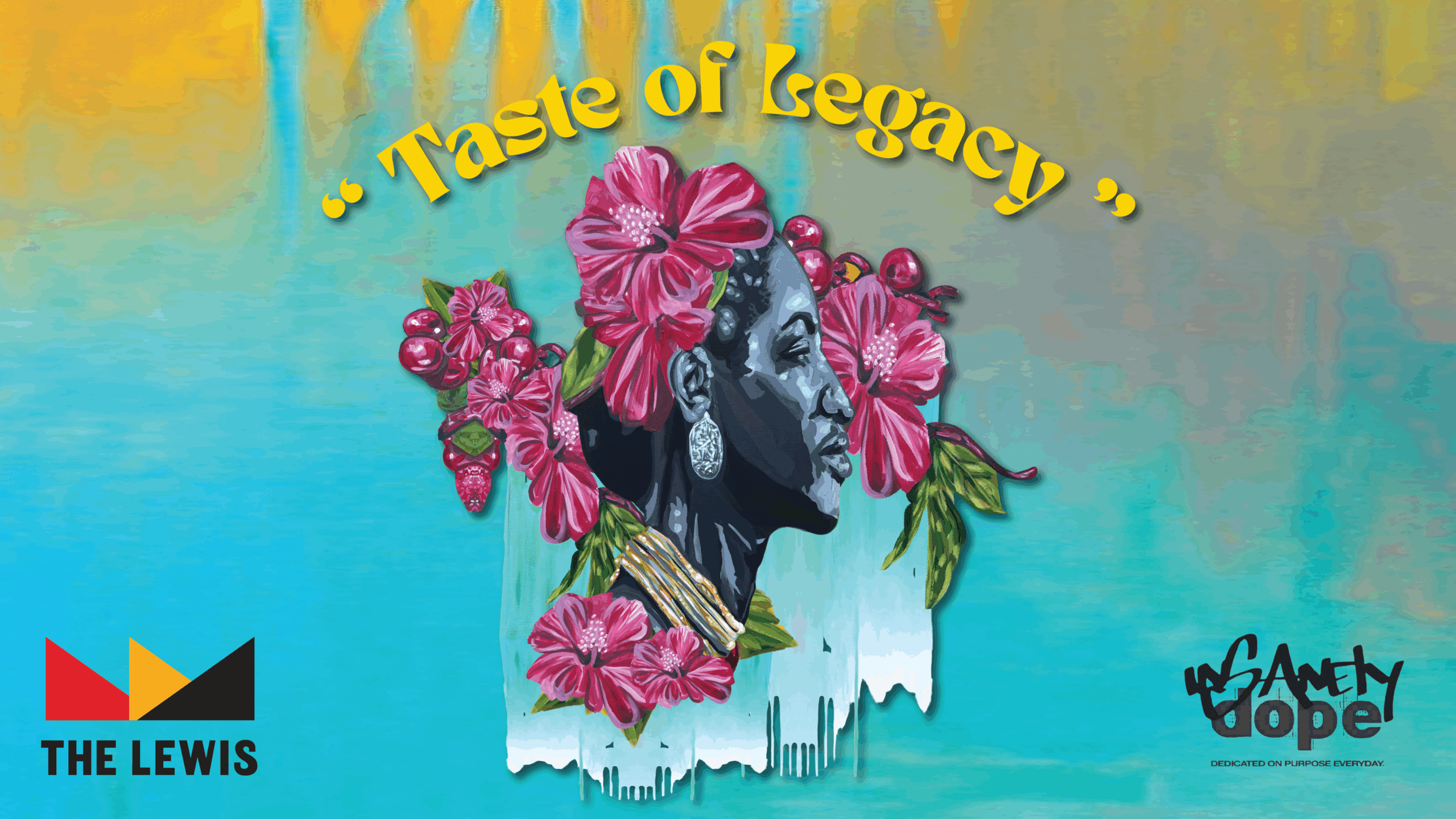


Reginald A. Lewis | Insansely Dope, Artist & Muralist
Robert T. Parker | Director of Interpretation, Visitor Experiences, & Education
“Taste of Legacy” is a vibrant tribute to African American heritage, resilience, and creativity. Centered around a powerful portrait, the painting blends bold colors and rich symbolism to honor tradition and progress. Red hibiscus and strawberries nod to the iconic “red drink,” while intricate adornments reflect African ancestry. With warm golds and cool blues evoking unity and movement, the piece mirrors the soul of Baltimore. More than art, it’s a celebration of Black excellence, the past, present, and future.”
The hibiscus plant holds layered significance within African American culture and experience, rooted in historical, culinary, medicinal, and symbolic traditions that trace back to Africa and evolved in the African diaspora. The Hibiscus is native to West Africa, in several African cultures, it is used in drinks, medicine, rituals, and cuisine. Enslaved Africans brought knowledge of hibiscus and often the seeds themselves to the Americas, including the Caribbean and the American South, where it became part of African American foodways and healing practices. One of the most iconic uses of hibiscus in African American culture is in the making of Red Drink, commonly served at celebrations and family gatherings. This sweet, tart beverage has roots in West African hibiscus teas (like bissap in Senegal, or zobo in Nigeria) and Caribbean sorrel.
It has become a staple of Juneteenth celebrations. Red is a powerful color in many West African spiritual systems, associated with vitality, ancestral reverence, and resilience. Hibiscus tea as “Red Drink” plays a role in Juneteenth observances, symbolizing the bloodshed of enslaved ancestors and the struggle for freedom. Its inclusion in festivities honors the legacy and cultural endurance of African American people. The hibiscus plant is more than a flower in African American culture — it is a living connection to African heritage, a symbol of resilience and resistance, a key ingredient in sacred and celebratory traditions, and a reminder of the deep roots and enduring beauty of Black life.